September suits a Helsinki trip built around architecture, museums, waterfront walks and a little flexibility. It is not reliably summer, nor is it automatically peak autumn colour. Bring weatherproof layers, choose an island outing when the forecast is favourable, and use the city's design events as a reason to select particular dates rather than filling every day with reservations.
What September weather actually means for your plans
The Finnish Meteorological Institute's 1991–2020 climate figures give Helsinki's Kaisaniemi station a September mean temperature of 12.3°C and average monthly precipitation of 56 mm. Those are long-term averages, not a promise about the afternoon of your visit, and the temperature is a whole-day mean rather than an expected daytime high. [1]
The practical response is to pack for changing conditions rather than for a single number. A light waterproof outer layer, something warm underneath and comfortable shoes that tolerate wet pavement are more useful than a suitcase divided into "summer clothes" and one emergency winter coat. A scarf or thin hat earns its place on a windy deck even when it stays in your bag during a sheltered city walk.
Make your waterfront day movable. Instead of buying every activity in a fixed sequence, reserve the experience that genuinely needs a slot and keep one museum visit available as a substitute. A grey morning can still make a good architecture walk; steady rain matters more if your main plan involves exposed island paths.
Early and late September should not be treated as interchangeable. Helsinki's tourism guidance describes autumn colour as a late-September-to-October attraction, and its foliage guide particularly highlights October. A visit in the first week of September should therefore be booked for the city, not for a guaranteed landscape of golden trees. [2][3]
Design events: use the correct year's calendar
The next September after this article's publication is September 2027. Helsinki Design Week's organiser has announced 3–12 September 2027. The announcement establishes the festival dates; it does not establish that a particular studio, building visit or workshop from 2026 will return. [4]
This distinction is important when reading older itineraries. An exhibition mentioned in a September guide may have ended months before you arrive. Keep the festival period as a planning anchor, then choose individual events from the programme for your year. A promising address is not the same thing as an open door, especially when a venue normally functions as a workplace.
Habitare, the furniture, interiors and design fair at Messukeskus, is announced for 8–12 September 2027. The organiser distinguishes public visiting from the professional and media period on Wednesday morning. Travelers who simply want to browse should choose a public session rather than assume that the fair's earliest opening time applies to every ticket. [5]
The overlap between the two events creates a useful choice. A design-focused traveler could concentrate a short stay around the second festival weekend. Someone more interested in quiet museum visits and neighbourhood cafés need not organise the entire trip around the fair. Avoid paying for an event merely because it is prominent on the calendar; consider whether you enjoy exhibitions, product displays and the time commitment they require.
For either event, book accommodation on terms you understand before committing to non-refundable extras. The value of a flexible room is that it preserves options while programmes develop, not that it guarantees a cheaper price later.
Keep one island day, but know which boats are seasonal
Suomenlinna is the simplest island option to retain in a September itinerary because HSL's public ferry operates year-round from Market Square. The crossing takes approximately 15 minutes, and an HSL ticket covering zone A is required; an AB ticket is sufficient for the central-city journey. [6]
That makes Suomenlinna different from a sightseeing cruise with a limited summer operating season. You do not need to abandon the sea fortress because a particular excursion company's calendar has ended. Equally, the availability of the public ferry does not mean every café, museum or private boat service on the islands follows the same schedule.
Plan the outing around what you actually want to do ashore. For a relaxed first visit, allow an unhurried walk and one indoor stop rather than trying to collect every museum. Bring a layer you can put on before boarding, and decide where you will eat before hunger forces the route.
A commercial evening cruise needs a separate calendar check. Stromma's published 2026 Helsinki Evening Cruise season ran from 20 May to 18 September. That completed season is a useful warning against assuming late-September availability, but it is not a confirmed timetable for 2027. [7]
If a boat trip is the main reason for travelling, wait for the actual departure to be offered for sale. If it is simply a pleasant extra, keep a shore walk as the alternative. This prevents a seasonal activity from becoming the weak point of the whole weekend.
Build days around neighbourhoods, not a list of indoor refuges
A good September day can combine the harbour area with the historic centre, then leave the later afternoon for a museum or café. Another can focus on contemporary architecture and public interiors around the central railway station. The point is to move between outdoor and indoor experiences without crossing the city each time the weather changes.
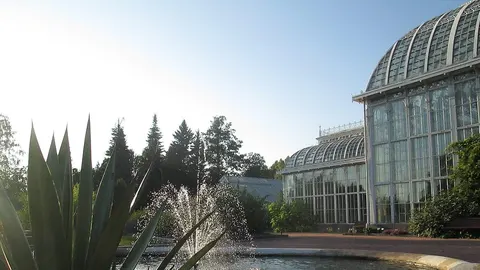
Kaisaniemi Botanic Garden offers a particularly clear indoor-outdoor split: the outdoor garden is free, while the greenhouses require admission. The university publishes separate opening arrangements for these spaces, so an evening garden walk is not automatically an opportunity to enter the glasshouses. [8][9]
Use that distinction when planning a rainy day. Choose the greenhouse visit deliberately and arrive during its admission period; do not leave it as a vague late-afternoon backup. The same principle applies to a museum with a timed exhibition ticket or a concert with a fixed start.
For a two-day stay, one substantial cultural visit per day leaves room for lunch, browsing and a waterfront detour. For a longer stay, add a day trip only after deciding that you want a different setting rather than simply more sights. September does not require a packed indoor itinerary: it rewards the ability to change the order of an otherwise coherent plan.
What to book, and what to leave open
Book the accommodation, the performance you particularly want, and any festival activity with limited capacity. Treat restaurant reservations as useful when a meal is central to the trip, not as an obligation to schedule every evening weeks ahead.
Leave the precise island day and the longer park walk flexible until the forecast is meaningful. This is a planning recommendation rather than a claim that forecasts will always be reliable: the benefit is having two workable versions of the day.
Finally, distinguish a seasonal expectation from a guaranteed experience. September can offer comfortable walking weather, design programming and the beginnings of autumn, but it cannot promise sunshine, peak foliage or every summer boat service. A satisfying visit is one where the museums and neighbourhoods already appeal to you, with good weather adding possibilities rather than rescuing the itinerary.
Source & editor notes
Climate figures are 1991–2020 normals, not a forecast. The 2027 festival dates are announced; individual programmes may change. The cruise dates describe the completed 2026 season. Routing and packing recommendations are editorial.