The Architecture and Design Museum is worth visiting when you want to understand Finnish design rather than simply shop for it. Choose it for the current exhibition and the questions it raises about everyday life, buildings and objects. For upcoming travel, the decisive detail is its announced closure from 7 January 2027, with reopening planned for 5 March 2027. [1]
First, distinguish today's museum from the future building
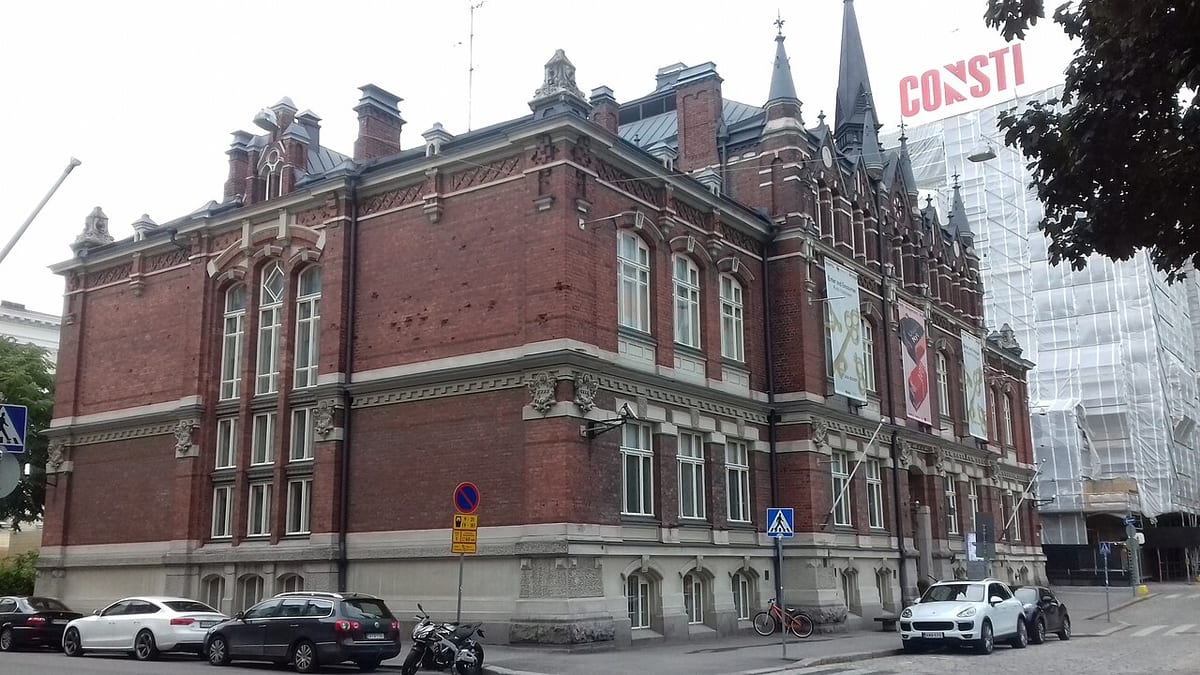
The museum currently welcomes visitors at Korkeavuorenkatu 23. Its combined name does not mean that a new waterfront museum has already opened, and older two-building directions should not be followed without checking the present visitor information. [2]
There are two separate developments. The existing museum is being reworked for a new presentation in spring 2027. A future museum building in Helsinki's South Harbour is planned for completion in 2030. The first is an upcoming change to the current visitor experience; the second is a longer-term construction project, not an attraction available during a visit today. [1]
This matters because an attractive architectural rendering can create the wrong expectation. Book a visit to the exhibitions that are operating at the current address, not to the imagined experience of a building still in development.
For travel between January and early March 2027, the announced closure should shape your plan before you reserve accommodation specifically for a design weekend. Other architecture and museums remain possible, but they are alternatives rather than a way to enter a closed institution.
For a later visit, read the programme after reopening. A description of the 2026 galleries should not be treated as a permanent room-by-room guide.
What you are paying to understand
The museum's current Aalto Design – Shapes of Wellbeing exhibition runs from 5 June 2026 to 6 January 2027. It approaches the work of Alvar, Aino and Elissa Aalto through the idea of wellbeing, connecting architecture and design with the lives of the people who use them. [3]
That framing is useful even when you do not recognise every designer or object. You can look at a chair, a room or a plan and ask what problem it is trying to solve: comfort, light, privacy, movement or social contact.
A design museum visit becomes more rewarding when you move beyond "Would I buy this?" An object may be important because of its manufacturing method, its intended user or the change it represented at the time. Reading a few labels carefully can reveal more than photographing every display.
The museum is therefore a stronger choice for someone interested in how things work and why they look the way they do than for someone seeking a quick room of decorative souvenirs. You do not need professional training, but curiosity helps.
Allow enough time to follow one exhibition's argument. As an editorial planning allowance, roughly 90 minutes to two hours gives room for a focused visit and a pause; it is not an official required duration or an average measured from visitors.
Tickets: age categories make a real difference
The current visitor page lists the following admission categories. These are the published prices checked for this article, not guaranteed prices for the 2027 reopening. [4]
| Visitor category | Published admission |
|---|---|
| Adults aged 30–69 | €23 |
| Young adults aged 18–29 | €6 |
| Children aged 2–17 | €3 |
| Seniors over 70 | €14 |
The difference is large enough that a group should calculate its own total rather than multiply the standard adult fare by everyone travelling. Two visitors aged 30–69 would pay €46; two visitors aged 18–29 would pay €12. Those are calculations from the displayed categories.
Do not assume an old guide's free-child policy still applies. Equally, check any applicable concession or accepted museum card before purchasing another ticket. A card can change the marginal cost of the visit, but buying a new pass only makes sense against the museums you genuinely intend to enter.
The museum also advertises an adult combination including an audio guide at €25. Treat the extra as a decision about how you prefer to explore, not as evidence that the ordinary ticket omits the exhibition itself. [4]
For an uncertain visitor, the best value test is simple: read the current exhibition description before buying. A discounted ticket does not turn an uninteresting subject into a good use of an afternoon.
How to place the museum within a day
The address makes it practical to combine the museum with a design-district walk rather than build the entire day around transport. Visit the exhibition first when it is your main priority, then use nearby browsing and a meal as flexible additions.
This sequence gives the displays a useful afterlife. You may notice materials, shop interiors and furniture differently once you have spent time thinking about how objects are designed. There is no requirement to buy anything for the outing to feel complete.
Avoid scheduling another substantial art museum immediately afterwards unless you know you enjoy long cultural days. A change from looking at displays to walking, eating or sitting outdoors can preserve your attention.
For a wet day, the museum is a deliberate indoor activity rather than an emergency shelter. That distinction matters if admission is a significant part of your daily budget: choose it because the subject interests you, not solely because it happens to be nearby when rain starts.
Opening periods and access are not the same question
The museum's visitor information distinguishes winter and summer schedules. In the winter season it closes on Mondays, while Tuesday has an extended evening opening; summer arrangements are broader. Use the date-specific schedule for your trip, especially around holidays and the announced renovation interval. [4]
The building also has a separate accessible entrance via the courtyard at Ullanlinnankatu 4. The museum states that pedestrian access remains available during works in front of the building, but travelers who need a particular drop-off route should use the current access instructions. [4]
The City of Helsinki says access to the museum remains open during the surrounding street and square works, which were scheduled to continue until mid-December 2026. Follow the temporary pedestrian signs rather than interpreting construction outside as a museum closure. Transport arrangements are a separate question, so use HSL's current route planner for the journey. [5]
Travelers with specific equipment or sensory requirements should ask about the exact facilities they need. A general "accessible" description cannot answer every question about lifts, seating, sound or exhibition layout.
When another choice makes more sense
Skip this museum when design and architecture do not interest you, when the announced closure covers your dates, or when you would rather spend the limited budget on a different subject. You can still appreciate Helsinki's public architecture through buildings such as Oodi, whose public floors are free to visit. [6]
Choose it when you want context that a street walk or design shop cannot provide. The strongest visit is not a rushed circuit of famous objects, but an hour or two spent understanding how design decisions affect people.
For November and December 2026, that can mean engaging with the Aalto exhibition. For spring 2027 and beyond, it means assessing the newly opened presentation on its own terms. The museum is worth considering, but the current programme and the correct date matter more than an old reputation or a future rendering.
Source & editor notes
Current admission and location are from the museum. Its own 8 October 2026 announcement gives the January–March 2027 closure and planned 2030 building. Future dates are plans; current prices are not assumed to survive reopening.