Helsinki's Tram Museum is worth visiting as a small, free stop for families, transport enthusiasts and anyone curious about everyday city life. It is not a vast vehicle collection or a tram ride. Its strongest appeal is the chance to examine historic cars and try playful activities without committing to a costly, full-day attraction. [1]
What you are actually visiting
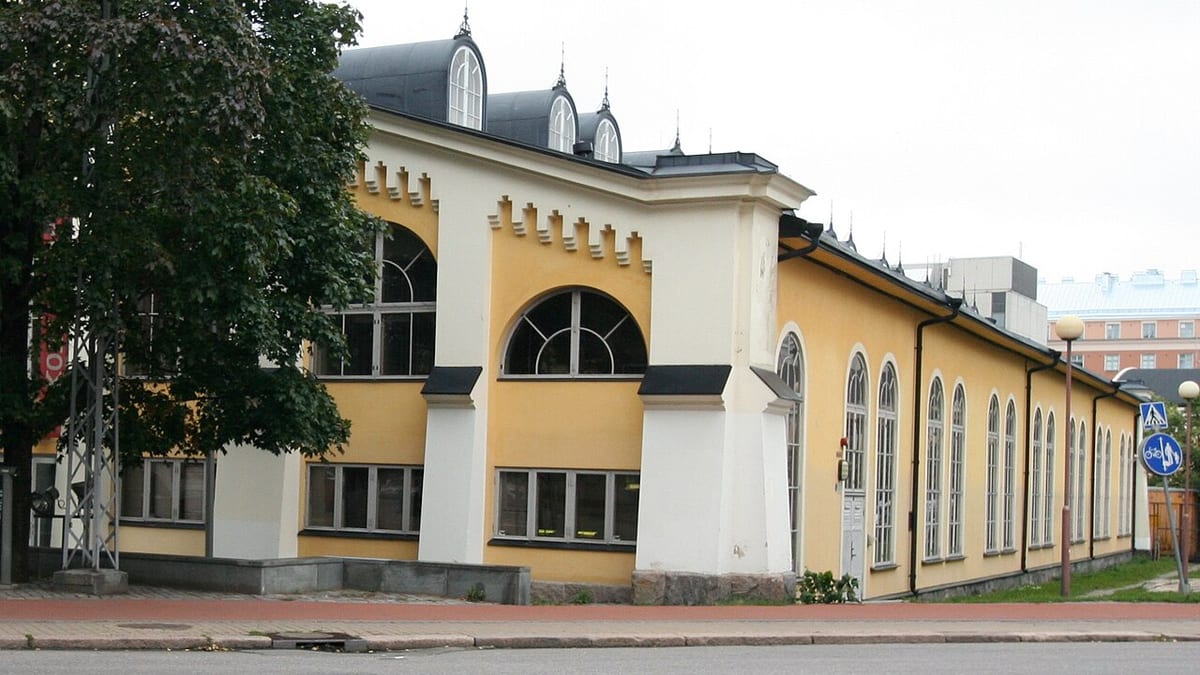
The museum occupies a former tram depot at Töölönkatu 51A, within the Korjaamo Culture Factory in Töölö. It belongs to Helsinki City Museum, rather than functioning as a separate heritage railway or an operating depot tour. That distinction is useful before you make the journey. [1][2]
The exhibition has six tram cars and five thematic "stops". The vehicles include a horse-drawn car, an early electric car associated with the German manufacturer Kummer, and an open-backed car used into the period of the Helsinki Olympics. These are the objects around which to build the visit, not evidence of an enormous collection hidden elsewhere in the building. [1]
For a casual visitor, the compact scale is an advantage. You can look closely at a few vehicles without feeling obliged to march through a succession of halls. For an enthusiast travelling specifically for a major national transport collection, however, it is important to calibrate expectations: this is a focused Helsinki tram museum.
I would allow roughly an hour for an ordinary first visit, with more flexibility for children who become absorbed in the activities. That is a planning recommendation, not a measured average. Someone interested in every label and vehicle detail may stay longer, while a quick adult look can be shorter.
The interactive element changes its value for families
The museum's Sisulaattori simulator lets visitors take the role of driver or conductor, using sound and video to connect the tram with different periods of city life. There is also a play area based on a Helsinki map and an opportunity to practise stamping tickets. These activities make the visit more than looking at vehicles from a distance. [1]
Let children try an activity before asking them to pay attention to a long historical explanation. A useful sequence is to explore one car, try the ticket activity and then return to the displays with a specific question: where did passengers enter, how did fares work, or what would the conductor have needed to watch?
For adults, the same approach avoids nostalgia becoming the whole story. Public transport is also about work, access and the organisation of a city. Consider how the layout of a carriage changes the relationship between driver, conductor and passengers. Compare the physical space with the tram you used to arrive, rather than simply deciding which old vehicle looks most charming.
Do not promise children an actual journey on a historic tram as part of admission. The attraction describes a museum and simulator, not a scheduled heritage ride. A normal public-transport journey before or afterward can still make a satisfying pairing, but it is a separate activity with its own fare rules. [1][3]
Free entry does not mean you should ignore the calendar
General admission is always free, and the regular opening pattern is 11:00–17:00 every day. This makes the museum particularly useful when you want a modest indoor activity without another admission charge. [1]
The caveat is private-event use. Korjaamo is an active cultural venue, and the museum publishes exceptional closures rather than guaranteeing that every ordinary opening day is available. Upcoming listed exceptions include closure on 5 November 2026, early closing at 16:00 on 20 and 27 November, and closure on 6 December. [2]
For a family making a special journey, this is worth checking once at the planning stage and again on the day. It is more consequential than trying to find a discounted ticket to a museum that is already free. A closed door would waste the outing; a full-price versus reduced-price decision does not arise here.
The same logic applies around holidays. The museum publishes specific Christmas and New Year arrangements. Do not infer that "open every day" overrides an exceptional closure merely because a general travel listing repeats the weekly timetable. [2]
Food, belongings and accessibility
The refurbished lobby includes lockers and an area where visitors can eat packed lunches. This gives families a useful way to combine the museum with a simple meal, without turning the outing into an expensive restaurant stop. Korjaamo also has restaurant facilities, but the museum's admission and its neighbouring food service should be treated as separate operations. [1][2]
Pack a meal that is easy to manage in a shared space, and leave time to clear the table before returning to the exhibition. Food belongs in the designated area, not among historic vehicles. The practical benefit of the lunch space is that you can take a pause when attention begins to fade, rather than ending the visit simply because someone is hungry.
The museum lists wheelchair access, an accessible toilet and a lift, but no designated accessible parking. Its linked public-service information gives more detailed entrance measurements, including a long ramp, a heavy door and a threshold. Those details matter more than a single access symbol for someone visiting independently. [2][4]
Contact the museum about boarding individual historic cars when that is essential to your visit. Access to the exhibition floor does not establish access to every vehicle interior. Ask about the parts that interest you, rather than seeking a yes-or-no judgement on the building as a whole.
Make it part of a good day, not an oversized promise
The best use of the Tram Museum is as an anchor for a modest Töölö outing. Choose a meal or another nearby activity according to your energy rather than attaching several paid attractions simply to fill the day. The museum's value lies partly in allowing a complete, satisfying visit without a heavy commitment.
For a mixed-interest group, agree on a rough meeting time before entering. The transport enthusiast can examine the cars carefully while others spend more time on the interactive elements. Nobody needs to pretend that every display is equally interesting for the visit to work.
I would prioritise it for a child who already notices trams, an adult interested in urban history, or a visitor seeking a free indoor stop. I would give it lower priority for someone with only a few hours in Helsinki who wants monumental architecture or a comprehensive art collection. It is worth visiting when its small scale is understood as a strength, not mistaken for a promise of a much larger attraction.