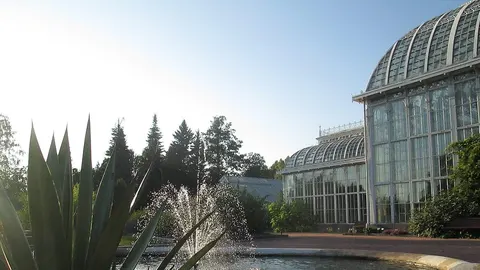
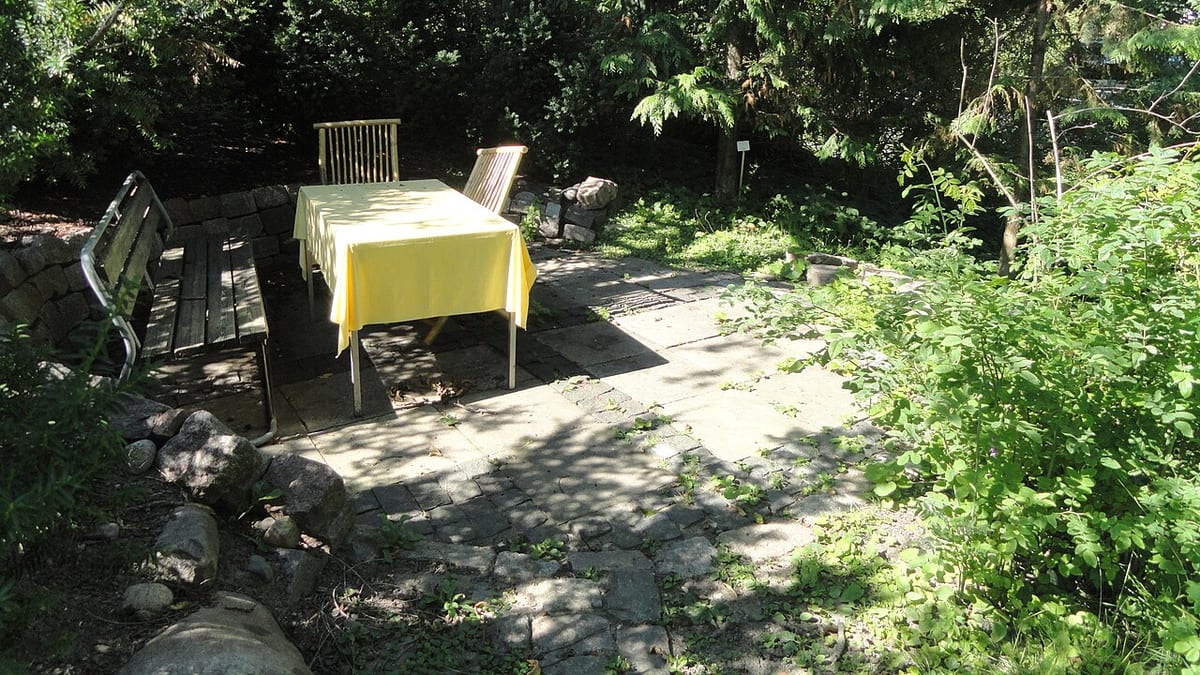
Kaisaniemi Botanic Garden is worth visiting for its glasshouses, plant collections and convenient central location, especially when you want a quieter break from sightseeing. Choose the free outdoor garden for a short stroll; pay for the greenhouses when the plants themselves interest you. They are separate experiences with different opening arrangements, not one attraction that is either entirely free or entirely ticketed. [1]
What makes the glasshouses interesting
The appeal is the contrast between plant environments rather than a succession of spectacular buildings. Luomus describes collections ranging from banana plants and flowering cacti to carnivorous plants, while the Palm House introduces plant evolution. That gives a visit a stronger purpose than simply finding somewhere warm: you can look at how different plants solve the same problems of light, water and survival. [2]
Start with something you recognise. A familiar houseplant growing at a different scale is often more engaging than an unfamiliar Latin name. Then compare leaf shapes, protective surfaces and climbing habits. This approach works for visitors who enjoy gardens without knowing much botany, and it avoids turning every label into compulsory reading.
The Water Lily Room deserves particular attention. Its famous Santa Cruz water lily is a living, seasonal specimen, not a permanent architectural feature. Luomus's own guide explains the plant and its changing appearance. Do not judge the entire visit against photographs showing an exceptionally large leaf or an open flower; a photograph records one stage of growth. [3]
The tourism board also highlights the Rainforest House and Palm House, including coffee and orchid collections. Choose two or three interests before entering rather than trying to memorise everything. A compact visit with a clear thread can be more satisfying than a much longer circuit undertaken only because every room is there. [4]
For photography, think about detail as well as scale. Leaves, textures and the relationship between plants and greenhouse structure make useful subjects even when a celebrated specimen is not flowering. Avoid blocking narrow paths while waiting for an empty background. The experience works best when looking at plants remains the main activity and photographs support it.
Free garden or paid greenhouses?
The outdoor area is free. Published greenhouse prices are €12 for a standard adult ticket at the desk and €11 online; students and visitors aged 5–18 pay €6 at the desk or €5 online. Children under five enter free under the ordinary individual-visitor policy. These are the prices checked for this guide, not a promise about a future year's tariff. [1]
For two adults and two children aged 5–18, that makes the greenhouse admission €36 at the desk or €32 online. The €4 difference is a calculation from those listed categories. It is useful, but not large enough to justify buying the wrong date or ticket type simply to obtain an online saving.
Pay when you want the indoor collection, not because you assume payment is necessary to enter the grounds. Conversely, a free walk outside will not show you the tropical rooms pictured in most visitor coverage. Decide which experience you want before comparing this attraction with a museum or another garden.
A mixed-interest couple can use the same distinction. Walk the grounds together, then make the greenhouse visit a deliberate shared activity rather than a reluctant extension of a park stroll. Families should decide whether children are likely to enjoy looking, comparing and searching for unfamiliar forms. This is not a substitute for a playground.
My planning allowance is roughly an hour for an unhurried greenhouse visit, with extra time for the grounds or a café stop. That is an itinerary suggestion, not a measured average or an official minimum. Plant enthusiasts can easily choose to spend longer; someone seeking only a brief green pause need not purchase admission at all.
Timing matters more than the weather forecast
The published standard greenhouse schedule is Tuesday and Wednesday 10:00–17:00, and Thursday to Sunday 11:00–18:00. Monday is normally closed. Ticket sales finish 30 minutes before closing. The outdoor garden normally opens daily 09:00–20:00, but storm conditions can restrict outdoor access. [5]
This makes Monday the most important trap. A map may show the botanical garden as open while the part you intended to see is closed. Read the greenhouse schedule, not only the place listing. Holiday exceptions can also override the normal week.
Arrive with enough time to enjoy the paid rooms rather than treating the last ticket-sale time as a sensible arrival target. If you have only half an hour before closing, a free outdoor visit may be the better choice. Saving the greenhouses for another day is preferable to paying for a rushed circuit.
In wet weather, prioritise the indoor collection and regard the grounds as optional. In pleasant weather, reverse that order if the outdoor planting is your main interest. This is a more reliable decision rule than assuming the attraction is equally rewarding in every season for every visitor.
A winter visit and a summer visit need not look alike. The glasshouses offer a controlled environment, while the outdoor garden changes with the year. Choose your ticket according to the experience available on the day rather than the season shown in promotional photographs.
Access, children and practical comfort
The garden and greenhouse building have accessible arrangements, but narrow internal passages matter. Luomus specifically warns that double pushchairs and large electric mobility scooters can have difficulty; the adjacent Café Viola is not step-free. These distinctions are more useful than a blanket claim that the entire outing is accessible. [1]
A wheelchair user should separate three questions: entering the building, moving through the desired rooms, and using the café afterwards. Ask the garden about your equipment's dimensions when clearance is a concern. A nearby alternative café may be a simpler solution than abandoning the garden because one ancillary building is unsuitable.
Dress in layers. You may arrive bundled for the street and then spend time in warm, humid rooms. Put bulky outerwear away where instructed instead of carrying it through the whole collection. Keep a small bag for essentials so that changing temperature does not turn into a constant struggle with coats.
With children, set a simple challenge: find a plant that stores water, one that climbs, and one with leaves larger than their hands. Looking for differences is usually more rewarding than rushing from room to room. Keep the challenge observational; plants are not handling exhibits, and the collection includes species that should not be touched.
How to fit Kaisaniemi into a Helsinki day
Kaisaniemi works especially well as a pause between central-city activities. Do not build an elaborate transport excursion around it when you are already nearby. The university's arrival guidance places the Kaisaniemenranta entrance within walking distance of Hakaniemi and University of Helsinki metro stations. [1]
Pair the visit with one contrasting activity: a city walk, an art museum or lunch. Avoid stacking several indoor attractions merely because the weather is poor. A greenhouse visit is most distinctive when it breaks up the day rather than becoming another room-by-room exercise.
Skip the paid section when your priority is a panorama, a major art collection or energetic entertainment. Choose it when close observation, living collections and a gentler pace sound appealing. Kaisaniemi does not need to be Helsinki's biggest attraction to justify a visit; its value lies in giving the right visitor an absorbing, manageable change of scene.
Source & editor notes
Prices and access conditions come from Luomus; visit durations are editorial suggestions. The guide separates free outdoor access from paid greenhouse admission and flags narrow passages rather than treating accessibility as a single yes/no label.