Villa Gyllenberg is worth visiting if you enjoy art in a domestic setting and are willing to make a purposeful journey beyond central Helsinki. The combination of a former home, a gallery and waterside surroundings gives it a different character from a large city-centre museum. Its limited opening days and the older house's steps matter more to planning than the modest size of the collection. [1][2]
A home and a gallery, not just a collection of paintings
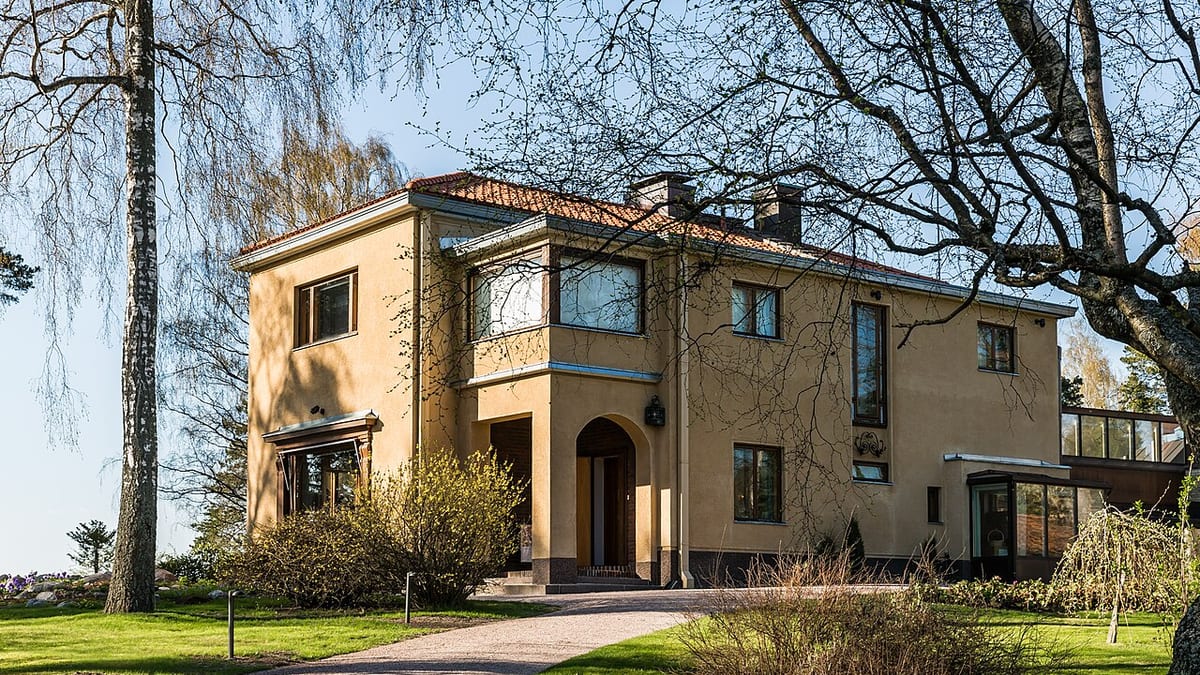
The museum occupies the former home of Signe and Ane Gyllenberg, with a gallery added to display art for the public. The house retains rooms furnished with the couple's possessions, while the gallery accommodates changing presentations and exhibitions. [1]
That arrangement changes how you look at the work. In the domestic rooms, the relationship between furniture, paintings and the scale of the house is part of the visit. In the gallery, you can concentrate more directly on the exhibition's subject.
Do not rush through the home as a corridor to the "real" museum. The reason to choose this venue is partly the experience of seeing a collection in the place where its owners lived. It asks for a slower, more attentive visit than a sequence of famous masterpieces.
The foundation's collection is predominantly Finnish and includes a substantial group of works by Helene Schjerfbeck, alongside other Finnish and older European art. The museum describes its holdings, but ownership does not guarantee that every named work or artist will be represented in the rooms on your date. [3]
For a specialist interest, consult the exhibition programme before travelling. For a general art lover, the house-and-gallery combination can be enough of a reason to go without relying on one particular painting.
Who will enjoy it most?
Villa Gyllenberg is a strong choice for travelers who prefer a small museum with a clear identity to a long afternoon of gallery fatigue. It also suits someone who has already visited a larger Finnish art collection and wants a more personal context.
It is a less obvious priority for a first-time visitor with only a few hours in Helsinki. The journey and restricted opening window make it a deliberate outing, not a convenient stop between the railway station and harbour.
Families should consider their children's interests rather than simply the free admission for younger visitors. A child who enjoys looking closely at rooms and paintings may engage with it; someone expecting a hands-on play attraction may not. Plan a manageable visit and an outdoor break instead of assuming that "small" automatically means easy.
For companions with different levels of interest, agree on a realistic length before entering. One person can spend time with a few works while another appreciates the house, but the outing works best when nobody feels obliged to inspect every item.
Opening days and tickets: avoid the wrong afternoon
The museum lists regular public opening on Wednesday, Thursday, Saturday and Sunday, 12:00–17:00. That leaves several ordinary weekdays unavailable and makes an early-morning visit impractical. [4]
Standard admission is €12, with a €10 category for students, pensioners and visual artists. Under-18s and several other listed categories enter free; bring the relevant proof when claiming a concession. [4]
For two adults, normal admission totals €24. That calculation helps put the choice in context, but the main cost may be the afternoon you allocate rather than the entry fee. Compare it with the museum you would otherwise visit, not only with the cheapest ticket in the city.
The museum publishes occasional free-entry dates. As of this article's publication, 6 December 2026 is the remaining listed free date for the year. Earlier dates such as Halloween have already passed and should not be treated as upcoming opportunities. [4]
A free day is not automatically the best day for someone seeking a quiet visit. The museum identifies the final opening hour as generally quieter and Sundays as busier. That is useful venue guidance, not a guarantee of a particular crowd level. [2]
An early-afternoon arrival gives more room for the house, gallery and a pause. The quiet final hour can suit a focused visit, but it leaves less time for leisurely browsing.
Getting there without turning the trip into a puzzle
The address is Kuusisaarenpolku 11. The museum directs public-transport visitors towards Kuusisaari, with a final walk from the Kuusisaarenkuja stop, and recommends checking the HSL route for the journey. [2]
Enter the museum address and your intended arrival time rather than choosing a route to the district in general. This is especially useful on weekends, when a connection that looks straightforward on a map may involve a different wait.
There is limited parking, and the museum cautions that winter conditions can make parking along the street difficult. A car is therefore not automatically a simpler option just because the museum is outside the central sightseeing area. [2]
Leave some space around the museum reservation if you are combining it with another stop. A tightly planned sequence of two smaller museums can become frustrating when their opening days, lunch options and transport do not align.
For a relaxed afternoon, one art visit and time in the surroundings may be a better choice than adding a second venue solely because it is geographically close.
Accessibility: the newer gallery and older house differ
This is the most important distinction for visitors who need step-free access. Villa Gyllenberg describes its newer entrance, gallery, shop and café area as accessible, while the older home contains multiple steps and an upstairs staircase. [2]
A statement that the museum has an accessible entrance should therefore not be read as a promise that the whole historic house can be explored by wheelchair. Ask staff specifically which rooms and current exhibits are reachable with your equipment.
The museum provides seating and has an accessible toilet in the entrance area. Travelers who need breaks can plan the visit around those facilities rather than pushing through the whole route at once. [2]
For someone whose main interest is the temporary gallery exhibition, the accessible newer section may still provide a worthwhile experience. For someone travelling primarily to see the furnished historic rooms, the limitations could change the decision substantially.
Leave time for the café, but not an assumed full lunch
Café Signe is a small museum café serving drinks, pastries and similar light items. Its published service ends at 16:30, before the museum closes at 17:00, so a final-hour visit should not leave the café until the very end. [2]
Treat it as a pleasant pause rather than a guaranteed substitute for a full meal. Eat beforehand when you know you will want something substantial, and keep the café optional rather than making your whole afternoon depend on finding a seat.
Villa Gyllenberg earns its place through a particular combination: personal collection, furnished home and a quieter setting. Choose it for that experience, arrive on an actual opening day and account for the house's access limitations. With those expectations, it offers a distinctive alternative to another large central museum.
Source & editor notes
Collection holdings are not a guarantee of display. Quiet-hour guidance is the museum's own assessment. Accessibility differs between the modern gallery and historic house; no firsthand inspection is claimed.