Visit Jätkäsaari for a different view of Helsinki: a former cargo-port district becoming a residential waterfront, with surviving harbour buildings, public art and contemporary urban design. It suits a relaxed neighbourhood walk or time around a West Harbour ferry arrival. Do not come expecting a preserved old town - or a completed swimming complex where older plans still show Bunkkeri.[1][2]
Read the district as a place in transition
The Port of Helsinki describes Jätkäsaari's transformation from a major cargo-port area, active in that role until 2008. The city's development information shows a district still being built in stages, with housing, parks and transport links continuing to evolve.[1][3]
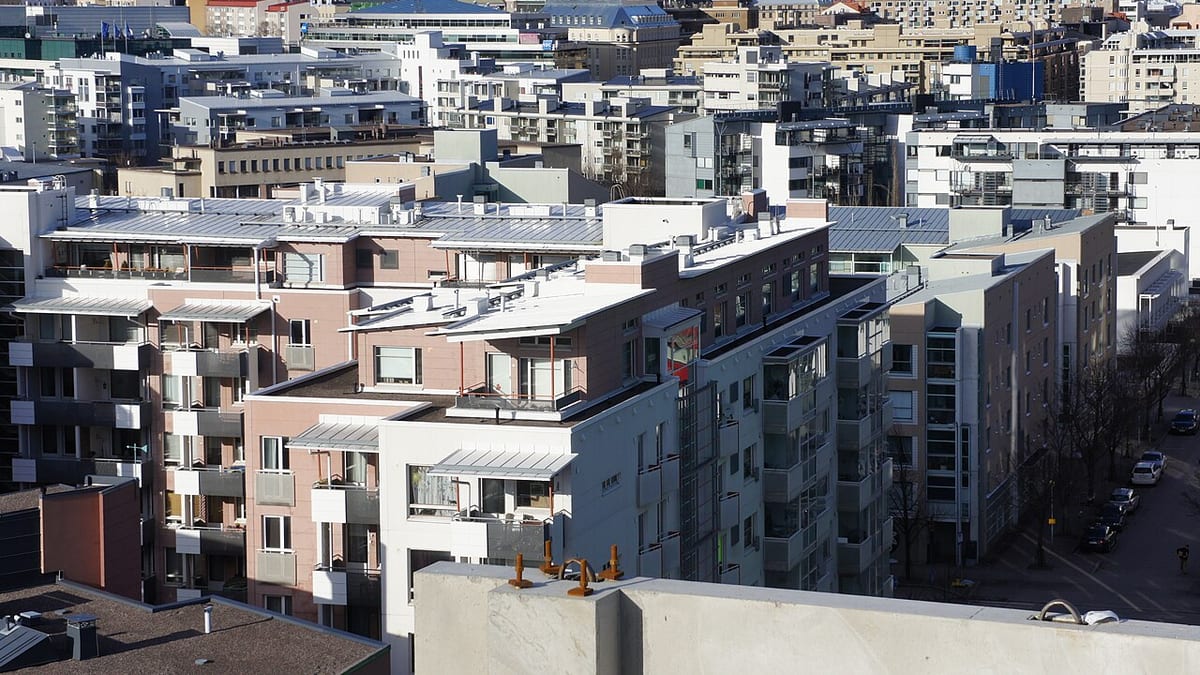
That history explains the experience on the ground. Large new blocks, active transport infrastructure and remaining older buildings sit together rather than forming one stylistically consistent attraction. For someone interested in how cities change, the contrast is the point.
It also changes expectations. A development rendering is not a photograph of a finished promenade, and a proposed amenity is not necessarily open. Use the current pedestrian route and signs when construction interrupts the most direct line on a map. Leave room for a detour rather than turning the walk into a rigid sequence of timed appointments.
The city's long-term figures for homes and jobs describe the intended development, not a reason to treat every planned service as already available.[1] Visitors get more from looking closely at the completed spaces than from chasing facilities that exist only in future plans.
Begin with Huutokonttori and the harbour story
Huutokonttori, at the meeting of Välimerenkatu and Tyynenmerenkatu, is one of the older harbour buildings that remains. The city's account explains its connection to the daily allocation of dock work and identifies the building's present mix of bar, Jätkäsaari library and information centre.[2]
It is a useful starting point because it gives the newer streets a historical reference. Rather than seeing only apartment buildings, you can imagine the district as a workplace organised around ships and cargo. The surviving building is evidence of that earlier life, not a reconstructed attraction.
The library and information function should be treated as an ordinary public service with its own opening arrangements. Do not assume that the entire building is a museum or that every door is intended for casual visitors. The same structure includes operational uses beyond leisure browsing.[2]
For a later stop, Huutokonttori's own bar information describes a cocktail-focused venue with a maritime atmosphere.[4] Choose it when that suits the group; it is not necessary to make alcohol part of the walk. The value of the stop is the connection between the setting and the district, not a claim that every visitor must order a particular drink.
Walk through Hyväntoivonpuisto
Hyväntoivonpuisto, the Park of Good Hope, runs through the district alongside its sports spaces. The city presents it as both a recreational area and an important walking-and-cycling connection.[1]
Use the park to understand the neighbourhood at a slower pace. Look at how the public route connects homes, play areas and the surrounding streets. This is more revealing than treating every block as a separate architectural landmark requiring a label and a photograph.
For families, a park-based route can be a better fit than walking continuously along the most traffic-oriented streets. For someone with limited time before a ferry, it also creates a natural point at which to shorten the outing rather than continuing towards every waterfront edge.
Keep the route considerate. Residential courtyards are not automatically public shortcuts, and people using the park are not part of a sightseeing performance. A good neighbourhood walk respects the distinction between public space and the private life around it.
The precise route should follow the paths available on the day. Construction can make a once-obvious connection temporarily unsuitable, especially for a pushchair or mobility aid. A broad loop with an easy return is more robust than an itinerary dependent on one narrow passage being open.
Public art and a working waterfront
The Port of Helsinki highlights the 8.5-metre Bad Bad Boy sculpture among nearby sights.[3] It is a useful visual stop, particularly for visitors who enjoy public art that is difficult to overlook. Treat it as one element of a wider walk rather than the sole reason for travelling across the city.
The harbour remains operational. Passenger flows, vehicle approaches and controlled terminal areas are not interchangeable with waterfront promenades. Stay on public routes, use designated crossings and do not pursue a better photograph into a restricted or working area.
For ferry passengers, establish your actual terminal and check-in deadline before exploring. "West Harbour" is a district-level description, not a substitute for the terminal named on the ticket. Your useful sightseeing window begins after allowing for baggage and ends before the operator's required arrival time.
The port publishes services at West Terminal 2, including luggage lockers in the entrance-floor area.[5] That may help an eligible visitor avoid dragging a bag around the neighbourhood, but access, size and price should be checked for the particular storage need. A terminal service is not a promise that all harbour buildings offer the same facility.
Add a high-level view without confusing it with pool access
Clarion Hotel Helsinki's Skyroom is on the sixteenth floor, with views across the city and water according to the hotel operator.[6] It offers a different perspective from the street-level walk and can suit a planned drink or evening stop.
The important distinction is between visiting a bar and using hotel leisure facilities. A hotel's public bar listing does not establish that non-residents can use its pool, sauna or gym. Book and pay for the service you actually intend to use rather than inferring wider access from photographs taken at the same hotel.
For a group, ask about reservations, age conditions and availability at the chosen time. A bar is not a free observation deck with guaranteed seating. In a shorter daytime visit, it can simply remain an optional extra rather than a reason to distort the route around uncertain opening hours.
Do not plan around the old Bunkkeri project
Older descriptions of Jätkäsaari can make the Bunkkeri warehouse and proposed sports development sound like a current visitor attraction. The city's 2026 updates say the old building has been demolished and describe a new swimming-and-sports project with completion estimated for 2029.[7]
That is a planning announcement, not an open pool. The distinction matters for families choosing a neighbourhood because they expect an indoor activity, and for anyone comparing hotel locations on the assumption that a nearby leisure centre is already operating.
A worthwhile present-day visit needs no speculative attraction. Start around Huutokonttori, use the Park of Good Hope as the walking spine, include public art or an accessible waterfront section, and finish at a suitable café or bar. Allow roughly a couple of hours as an editorial planning block, longer only when you deliberately add a meal or another activity.
Jätkäsaari rewards curiosity about everyday urban change. It is best enjoyed as a lived-in neighbourhood with a harbour past and an unfinished future - not as a checklist of facilities that a development brochure promises will eventually arrive.