
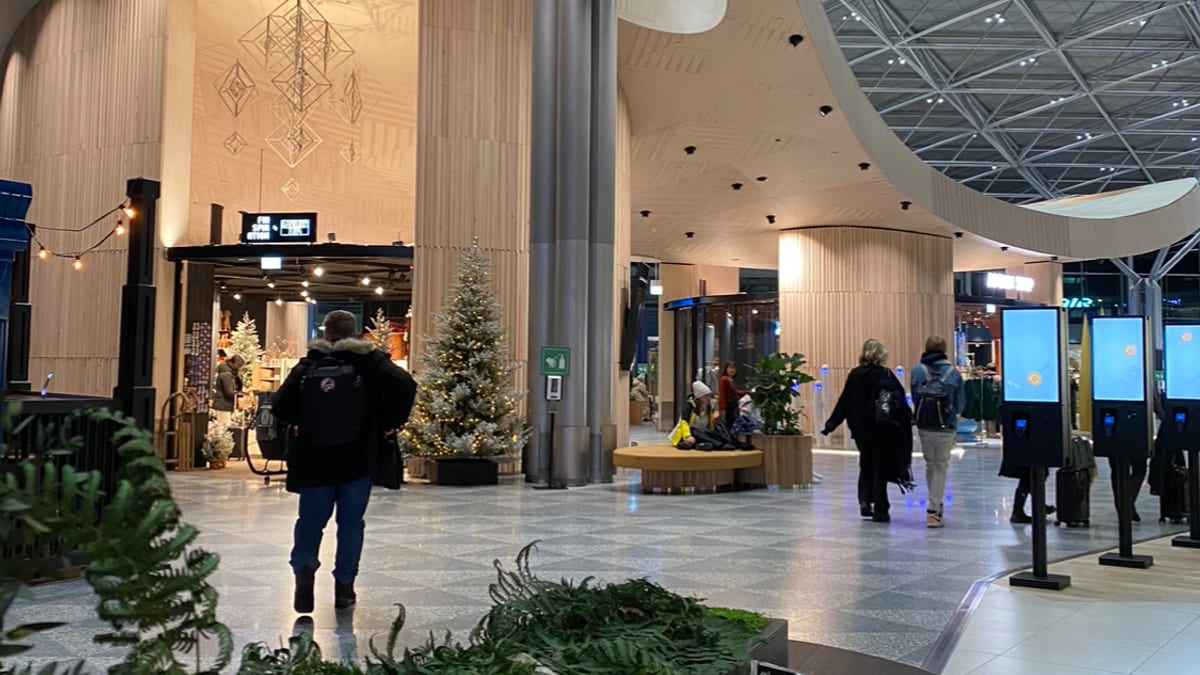
You can spend the night at Helsinki Airport, but an open terminal is not the same as a guaranteed place to sleep comfortably. For a short overnight wait, a permitted seating area may suffice. For dependable rest, choose a hotel or bookable room; some attractive airport resting spaces are available only to passengers using the non-Schengen departure area. [1][2]
First establish which part of the airport you can use
Your overnight plan depends on whether you are landside, before security, or airside, beyond the relevant controls. Do not choose a resting spot from a photograph until you know that your itinerary allows you to reach it. Arrival, baggage collection and the next flight's check-in arrangements can determine where you spend the night.
A passenger collecting a checked suitcase and checking it in again has a different problem from someone whose bag is transferred and who remains in a permitted transit area. Ask the airline about that distinction before building a plan around an airside seat. The same airport can be easy for one connection and inconvenient for another.
Finavia's Maja Living Room is a particularly useful example. It has quiet and relaxation spaces and is free around the clock, but Finavia explicitly limits access to passengers whose flight departs from the non-Schengen area. It is not a public sleeping room that every visitor can enter. [2]
Even when you can access Maja, think of it as a shared rest facility rather than a reserved bedroom. You are not buying privacy, exclusive use or a guaranteed uninterrupted night. Keep belongings compact, leave circulation space clear and follow staff instructions about how an area may be used.
If you are unsure where you may remain, the airport's arrivals-hall information and parking desk is open 24 hours. Asking there is more reliable than repeatedly moving between terminal areas on the strength of an old airport-sleeping guide. [3]
Free terminal rest versus a real bed
Choose terminal rest when the usable overnight interval is short, your next departure is straightforward and you can tolerate light, announcements and interruptions. Choose a room when sleep quality is central to the following day, especially before driving, work or a long onward journey.
Calculate usable rest rather than the headline connection length. An eight-hour gap between scheduled flights is not eight hours in bed: disembarking, reaching your resting place, preparing for departure and walking to the gate all consume time. A shorter connection with a nearby room can sometimes be easier than a longer connection requiring several transfers.
Bring a warm layer, an eye mask and earplugs if you intend to rest in public seating. Keep travel documents, medication and valuables with you rather than in an unattended bag beside a chair. Set more than one alarm, and avoid placing yourself where you cannot hear a relevant announcement or staff request.
Do not plan to use medication or alcohol simply to force sleep through an uncomfortable setting. The practical problem is better solved by choosing a suitable place, reducing unnecessary movement and preserving enough time for the flight.
For families, the cheapest theoretical option is not always the best-value one. Compare the cost of a room for the whole party with the difficulty of keeping children comfortable and supervised in a public terminal. The answer may differ for a brief early-morning wait and a full overnight stop.
The hotel inside the terminal
Comfort Hotel Xpress Helsinki Airport Terminal is on the P-level beside the arrivals hall. Finavia lists overnight accommodation, daytime rooms subject to availability, and lockable RestPods for one or two people. The location avoids an outdoor shuttle journey, but it remains a landside hotel rather than an airside transit room. [4]
That location is valuable when you have collected luggage or are arriving before the next day's departure. It reduces the number of moving parts: find the room, rest, then return to departure procedures. You still need to allow for check-in, security and any other controls required for your flight.
The published daytime-room window is 09:00–17:00, subject to availability. Do not assume that a day-room rate automatically covers a midnight arrival or an overnight stay. Similarly, a RestPod and a conventional hotel room may have different booking durations, facilities and prices. Confirm the actual product before paying. [4]
Compare rooms on the total sleep opportunity. A cheaper hotel requiring two shuttle rides may be sensible for a long stop, while a terminal room can be worth more when every hour matters. Include transport, waiting and the effort of moving luggage rather than comparing room prices alone.
For an arrival shortly after midnight, confirm the booking date and arrival time with the hotel. Booking the calendar day on which you land can accidentally reserve a room that is not available until that afternoon. State clearly that you need access immediately after your night-time flight.
Why a lounge may not solve the overnight problem
Finnair describes its airport lounges as places to relax during their opening hours. That qualification matters. Lounge access does not automatically include an overnight stay, a bed or permission to remain after closing. [5]
Check three separate things before purchasing access: whether the lounge is in the correct departure zone, whether it is open during your wait, and how long your pass permits you to stay. A three-hour visit before a morning flight may be useful without solving the previous six hours.
Treat showers and refreshments as amenities, not substitutes for sleep. A lounge can make the final part of a connection more comfortable, but combining terminal seating overnight with a paid lounge in the morning may cost more than expected.
Older online guides can also use former hotel names or refer to facilities that have changed. Finavia's current hotel and service pages should determine what you book, rather than a remembered description of a sleeping pod.
Food, water and the next departure
Keep a modest snack available rather than assuming that the café nearest your seat will trade all night. The fact that the airport operates continuously does not mean every business does. This is especially relevant when a late arrival leaves few opportunities to browse.
Finavia lists drinking-water refill points in the departure areas. Carrying an empty reusable bottle gives you a useful option after the applicable security check. The precise refill point you can use depends on which part of the terminal you occupy. [6]
Before settling down, organise the next morning's sequence. Know whether you still need to check a bag, where the airline expects you to go and when boarding closes. An alarm set only shortly before departure is not a workable plan, even if you are already inside the airport.
For passengers arriving from the city during the night, Finavia identifies bus 600 as a round-the-clock link. Search the actual departure and allow for the walk into the terminal; a service operating overnight does not make every hotel equally convenient. [7]
The best overnight choice is the least complicated one that meets your need for rest. Public seating suits a tolerable wait, Maja can help eligible non-Schengen passengers, and a properly booked room provides the clearest route to genuine sleep. Decide based on access and usable hours first, then price.
Source & editor notes
Official airport and airline sources establish facilities and access, not guaranteed sleeping conditions or seat availability. No overnight stay was personally tested. Hotel and RestPod prices are not quoted because they depend on the selected date and product.